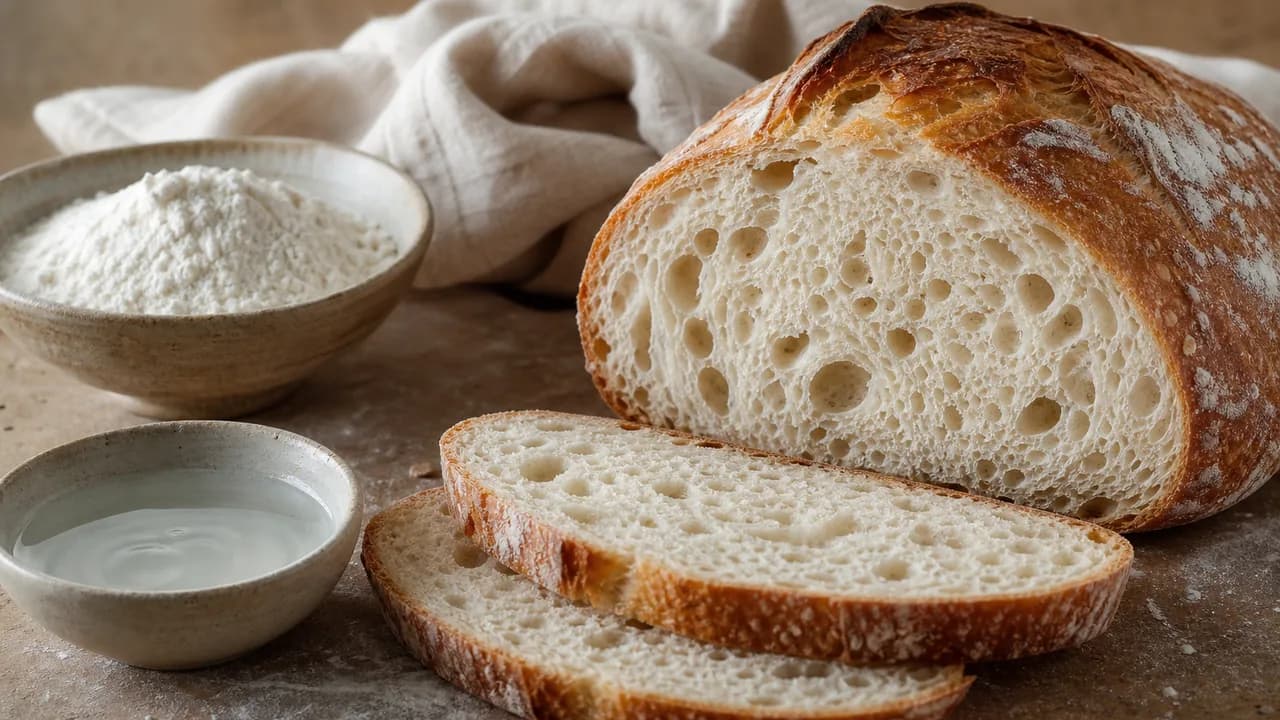
High-altitude banana bread adjustments
Fix gummy centers, dry edges, sinking, and dense banana bread at elevation.
Use this banana bread guide when the loaf browns before the middle sets, slices turn dry at the edges, the center line stays gummy, or a boxed mix domes and sinks after cooling. Start with timing, banana weight, and pan behavior, then tune sugar, flour, liquid, and leavening in clean test bakes.
Best for home bakers around 3,000 feet and higher who want moist banana bread without a raw center seam or over-browned crust.
Quick Answer: First Fixes for Better Loaves
Start with process, not panic edits. Check earlier than sea-level timing, reduce leavening slightly if collapse repeats, and add liquid in small increments only after timing is consistent. This order improves results fast without making the loaf gummy or heavy.
If you want a tested starting point instead of adapting a sea-level loaf, use the High Altitude Banana Bread Recipe first. It already includes elevation rows for flour, liquid, leavening, oven temperature, and pull timing.
If your loaf texture changes every bake day, standardize banana puree weight first. Banana ripeness variation can hide whether altitude adjustments are working.
If the center seam keeps returning, use Banana Bread Gummy Center Fix for a symptom-first diagnostic path.
If center set is stable but loaf slices still dry out, use Banana Bread Dry Fix for moisture-first corrections.
Moisture Control
Add a little liquid and pull earlier to keep slices tender.
Structure Control
Reduce leavening and adjust flour so the center holds after cooling.
Heat Control
Use moderate oven shifts and watch top browning before it gets too dark.
Adjustment Ladder: Use This Order for Clean Testing
- Choose your altitude baseline row and keep pan, rack, and recipe fixed.
- Start with earlier doneness checks and pull by center cues.
- If collapse persists, trim leavening before making major moisture edits.
- If loaf is still dry, add slight liquid support and keep timing improvements.
- Change one major variable per batch and evaluate after full cool.
This order matters because over-baking and over-leavening can mimic each other. If sequencing is sloppy, formula changes can look random even when they are technically correct.
High Altitude Banana Bread Chart by Elevation
Use this chart as your baseline for standard banana bread loaves and adjust from there by symptom.
These numbers are conservative starting points, not rigid rules. Banana ripeness, pan depth, and oven calibration can shift your final settings.
| Altitude Band | Sugar Move | Flour Move | Liquid Move | Leavening Move | Oven Move | Check Window |
|---|---|---|---|---|---|---|
| 2,500 to 3,500 ft | -0.5 tbsp per cup sugar | +1 tbsp per cup flour when batter is loose | +1 tsp to +2 tsp | -10% | +8°F to +12°F | Start checks 6 to 8 min early for standard loaf pans |
| 3,500 to 4,500 ft | -0.5 to -0.75 tbsp per cup sugar | +1 to +1.5 tbsp per cup flour | +2 tsp to +1 tbsp | -12% to -15% | +10°F to +14°F | Start checks 8 to 10 min early |
| 4,500 to 5,500 ft | -0.75 tbsp per cup sugar | +1.5 tbsp when center sinks | +1 tbsp | -15% to -18% | +12°F to +16°F | Start checks 10 min early and watch center set |
| 5,500 to 6,500 ft | -0.75 to -1 tbsp per cup sugar | +1.5 to +2 tbsp if structure stays weak | +1 to +1.5 tbsp | -18% to -22% | +14°F to +18°F | Start checks 10 to 12 min early |
| 6,500 to 7,500 ft | -1 tbsp per cup sugar | +2 tbsp, then fine-tune texture | +1.5 tbsp | -20% to -25% | +16°F to +20°F | Start checks 12+ min early and pull by cue |
Loaf Style Matrix: Pick the Right First Move
Banana bread style changes what “success” looks like. Use this table to match your correction to your texture goal.
| Style | Common Failure | First Move | Second Move | Target Cue |
|---|---|---|---|---|
| Classic Banana Bread Loaf | Tall dome then center dip | Reduce leavening and begin checks earlier | Trim sugar slightly for better structure | Gentle crown with stable center line after cooling |
| Chocolate Chip Banana Bread | Dense center with dry top crust | Add a little liquid and shorten late bake time | Add a little flour if loaf still slumps | Moist crumb with evenly distributed add-ins |
| Whole Wheat Blend | Dry slices and crumbly edges | Add a little liquid and pull earlier | Keep the oven increase moderate once early set improves | Cohesive slices with soft bite |
| Banana Nut Loaf | Heavy center and uneven rise | Reduce batter depth and adjust leavening | Add flour if the nuts keep the center heavy | Balanced rise and clean center cut |
| Streusel-Topped Banana Bread | Over-browned top before center sets | Reduce top heat exposure and check earlier | Adjust pan position and keep oven increase moderate | Set crumb with crisp topping, no burnt shell |
| Mini Loaves or Muffins | Dry exterior with tight interior | Shorten bake time decisively | Add a little liquid for tenderness | Moist center with even color throughout |
High-Impact Variables Most Bakers Overlook
Even a good formula can fail when process variables drift. Banana moisture, pan material, and slice timing can change texture a lot at altitude.
| Variable | Impact | Practical Move |
|---|---|---|
| Banana ripeness and puree weight | Riper bananas increase sugar load and moisture variation. | Weigh mashed banana so every test starts from the same baseline. |
| Pan geometry and depth | Deep pans delay center set and raise gummy-center risk. | Use the same pan dimensions while testing altitude moves. |
| Dark vs light loaf pans | Dark pans accelerate crust set and corner browning. | Switch to light metal if tops darken before center stabilizes. |
| Fat choice (butter vs oil) | Fat choice affects moisture retention and cooling texture. | Keep fat type constant until timing and structure are stable. |
| Mixing intensity after flour | Over-mixing can toughen crumb and amplify dryness. | Mix only to combine once flour is added. |
| Cooling and slicing timing | Early slicing can mimic underbake and tear crumb. | Cool fully before judging final structure and moisture. |
Doneness Cues by Pan and Loaf Type
Internal temperature is helpful, but banana bread should also be judged by center behavior and crust quality. Use this table to avoid under-set centers and dry crusts.
| Loaf Type | Internal Range | Center Cue | Crust Cue |
|---|---|---|---|
| Standard 8x4 or 9x5 Loaf | 200°F to 205°F | Tester shows moist crumbs, not wet batter | Top set with light spring-back and no raw seam |
| Chocolate Chip Banana Bread | 198°F to 204°F | Center holds shape when lightly pressed | Top browned evenly without hard shell |
| Whole Wheat Blend | 202°F to 207°F | No wet line through the middle after rest | Sidewalls set without edge over-dryness |
| Nut-Heavy Banana Bread | 200°F to 206°F | Uniform set around nut distribution | Crown intact with controlled browning |
| Mini Loaves | 198°F to 204°F | Fine moist crumbs on tester | Even color and soft sidewalls |
| Banana Muffins | 195°F to 202°F | Top springs lightly and center is fully set | Rounded tops without brittle edges |
Why Banana Bread Is Tricky at High Altitude
Banana bread is a high-moisture batter baked in fairly deep pans. At altitude, the top and edges can set fast while the center lags. The loaf can look done on the outside but still be sticky in the middle, or dry out by the time the center sets.
Start with timing. Keep pan geometry and banana weight constant, then adjust leavening and moisture in small steps. Once center set is stable, texture changes are easier to predict.
Cooling matters too. Banana bread keeps redistributing moisture after it leaves the oven. Judge final quality only after it cools fully, then change one variable for the next batch.
Symptom-to-Fix Matrix for High Altitude Banana Bread
Use this matrix to pick your next best move after each test loaf.
| Symptom | Likely Cause | First Adjustment | Second Adjustment |
|---|---|---|---|
| Loaf domes high then collapses while cooling | Leavening pressure outpaces structure set | Reduce leavening and begin checks earlier | Trim sugar modestly and keep pan depth stable |
| Dry crust and tight crumb | Bake overshoot and moisture loss | Pull earlier by center cues | Add a little liquid in the next batch |
| Gummy center line | Center did not fully set before pull | Extend bake in short increments with close checks | Reduce batter depth or adjust pan size |
| Pale loaf with weak structure | Insufficient heat support and set timing mismatch | Use moderate oven increase | Add a little flour if batter stays loose |
| Dry corners but soft middle | Pan heat imbalance and long bake tail | Switch to lighter pan and reduce late bake time | Rotate pan position if oven browns unevenly |
| Too cakey when aiming for moist banana bread | Overmixing or excessive bake time | Reduce mixing after flour and pull earlier | Rebalance liquid in small steps |
| Inconsistent texture across bake days | Changing multiple variables and banana ripeness drift | Weigh banana puree and lock baseline process | Change one major variable per test round |
| Top cracks deeply and dries | Top sets too early under strong heat | Moderate oven move and monitor top color sooner | Reposition rack for more even heat exposure |
Worked Example: Moist Classic Loaf at 5,280 ft
Start from your standard banana bread formula and apply the 4,500 to 5,500 ft row. Keep banana puree weight fixed and begin doneness checks 10 minutes earlier than your old habit.
If the loaf still dips in the center, reduce leavening slightly in the next round while keeping timing controls. If the loaf is stable but drier than desired, add a little liquid instead of extending the bake.
Worked Example: Chocolate Chip Banana Bread Without Gummy Streaks
Chocolate chips add texture but can exaggerate under-set center issues in deep batter. Keep pan depth controlled and avoid late bake extensions that dry the outer loaf.
Pull by center cues and confirm after full cool. If moisture is still too high near the center, make short bake increments next round and keep ingredient changes minimal.
Worked Example: Whole Wheat Blend That Stays Tender
Whole wheat blends at altitude can dry out quickly. Start with a little extra liquid and earlier pull timing before making major fat or sugar changes.
If structure weakens, add a little flour and adjust oven profile modestly. The goal is cohesive, moist slices with no gummy seam.
Batch Log Template for Repeatable Banana Bread
- Altitude band, loaf style target, and pan dimensions.
- Banana puree weight and ripeness notes.
- Sugar, flour, liquid, and leavening edits from baseline.
- First check minute, final pull minute, and doneness cues.
- Texture notes after full cool: crust, center, slice integrity.
- One variable selected for the next test loaf.
This log cuts guesswork and helps you improve faster.
Common Mistakes with High Altitude Banana Bread
- Using sea-level bake windows without early checks.
- Changing sugar, leavening, and moisture in one test batch.
- Ignoring banana weight differences between batches.
- Switching pan size or pan material while troubleshooting.
- Judging final texture before loaf is fully cooled.
- Over-baking to fix uncertainty instead of using better cues.
High Altitude Banana Bread FAQ
Use these answers when one symptom points in two directions, like a loaf that tastes dry at the edges but still has a gummy center.
What are the most important high altitude banana bread adjustments?
Start with the variables that change structure and moisture the fastest: slightly less leavening, a modest sugar reduction, a small liquid increase, earlier doneness checks, and a consistent pan size. Only add extra flour when the loaf sinks, cuts gummy, or clearly lacks structure.
Why does banana bread dry out faster at altitude?
Mountain air is usually drier, and water evaporates faster during baking. The loaf edges and top crust can overbake while the center is still setting, so earlier checks and a small liquid increase matter more than simply extending bake time.
Should I reduce sugar in high altitude banana bread?
Usually yes, but keep it modest. Too much sugar weakens structure and can make the center slump, while too little sugar makes the loaf dry and less flavorful. Start with about 1/2 to 1 tablespoon less sugar per cup, then adjust after one test loaf.
Do I need to reduce baking soda or baking powder for banana bread?
Often yes above about 3,000 feet. If the loaf rises fast, domes hard, then sinks as it cools, reduce leavening before changing every other ingredient. Fast expansion is one of the most common causes of a weak center at elevation.
How do I fix a gummy center in high altitude banana bread?
First confirm the loaf cooled fully, then check pan depth, banana weight, and center temperature. For the next batch, use a 9x5 pan if the batter is heavy, measure mashed banana, reduce leavening if it domes then falls, and bake until the center is about 200°F to 205°F.
How do I keep banana bread moist without making it gummy?
Add liquid in small steps, usually 1 teaspoon to 1 tablespoon depending on elevation and flour amount. Do not keep adding banana to chase moisture, because extra banana can make the center wet while the crust still tastes dry.
Does banana ripeness matter more at high altitude?
Yes. Very ripe bananas add sugar and moisture, which can change rise, browning, and center set. For repeatable testing, weigh the mashed banana instead of counting bananas by size.
Should I use an 8x4 pan or a 9x5 pan at altitude?
Use an 8x4 pan for a taller classic loaf when the batter is stable. Use a 9x5 pan for chocolate chips, nuts, very moist batter, boxed mixes, or higher elevations where the center needs help setting before the edges dry out.
Can I use this guide for chocolate chip banana bread and muffins?
Yes, but adjust for size and add-ins. Chocolate chips and nuts make the loaf heavier, so pan depth and center cues matter. Muffins and mini loaves need much shorter bake windows, so timing changes usually matter before ingredient changes.
How many test batches should I expect before banana bread is consistent?
Most home bakers can dial in a reliable loaf in two to four batches if they change one major variable at a time. Keep notes on elevation, pan, banana weight, oven temperature, bake time, and the exact failure you are correcting.
Can boxed banana bread mix be adjusted for high altitude?
Yes. Box mixes respond to the same altitude pressures as homemade recipes. Start with earlier checks, a small leavening or liquid correction if the mix allows it, and a wider pan if the center stays gummy.
What should I change first if my banana bread both dries out and sinks?
Change timing and leavening before making the batter wetter. A loaf can taste dry because the edges overbaked, then still sink because the center structure was weak. Start checking earlier, reduce leavening modestly, and use the same pan for the next test.
Sources and Related Pages
This guide applies established altitude references to banana bread for home baking.